

















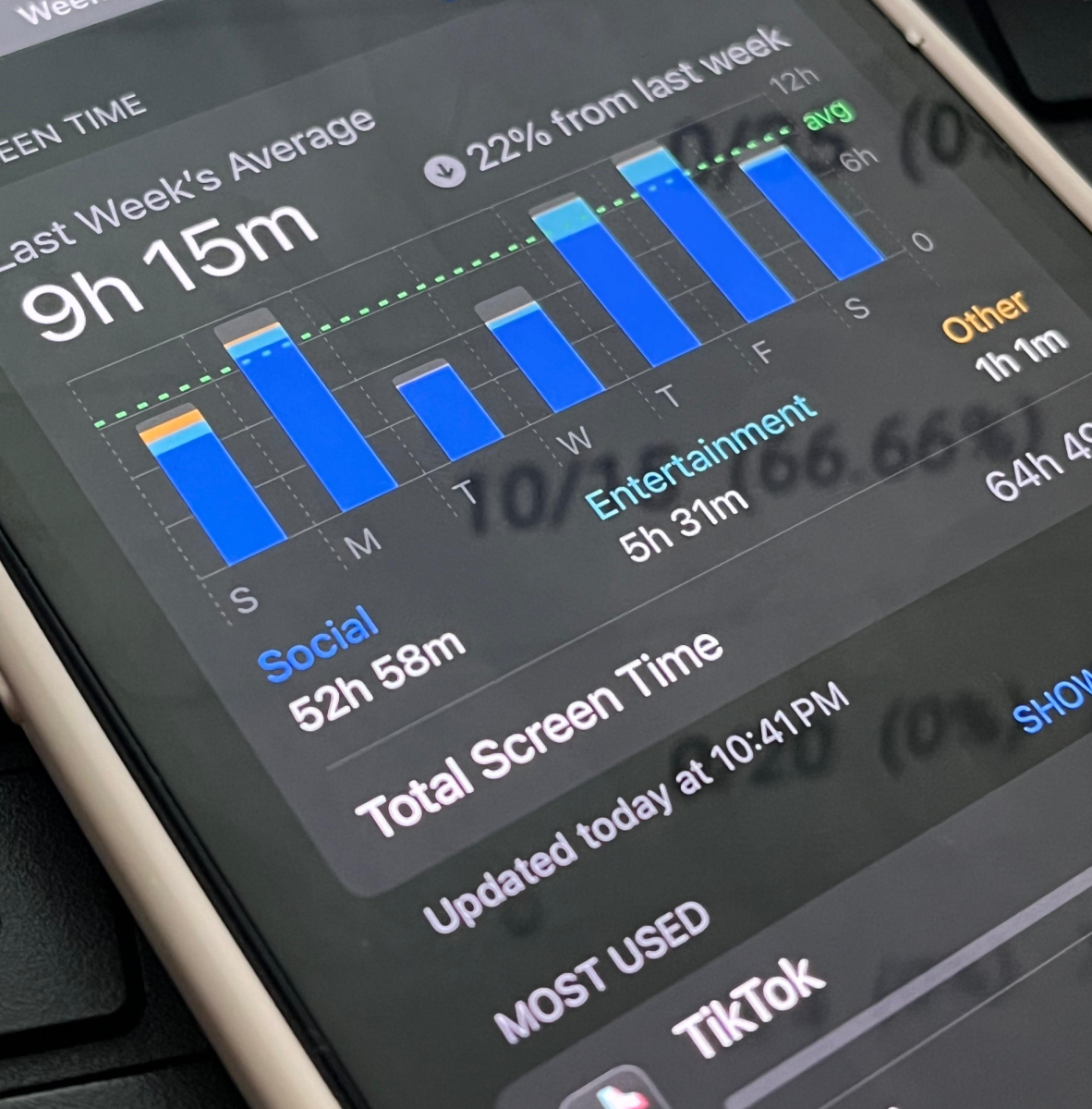
Screentime has affected many students and their education. Governor Reynolds signed House File 782, prohibiting phone usage during instructional time to try to combat this issue. Phones are a distraction in classrooms, so they are required to be put away in a caddy or turned off. The effects of phone usage and the increase in screen time have caused negative academic performance and mental health issues. Seniors, as of 2025, have shown an increase in lower scores in reading and math due to screen time and a decrease in attention span.
Many students at Ames High agree that phones are a problem. Jace Barton, a senior, is one of those students. “It’s a lot easier to get stuck looking at your phone, forgetting about the world around you. I have seen this daily in any social setting, simply because it’s become socially acceptable. This problem leads most people today to lack things like social skills, proper communication, and a lack of an attention span,” said Jace. “If a student is deciding to look at their phone instead of paying attention in class, that is their decision, and their grade will reflect that. On the other hand, if a student wants to learn and work in class, that is also their decision. Most people by the age they come into high school have already learned how to self-regulate themselves, including with their phones.”
According to The Pew Research Center’s survey on Teens and Social Media Fact Sheet, the most-used apps by teenagers in the US are YouTube (90%), TikTok (63%), and Instagram (61%). This is reflected in classrooms throughout the nation, including Ames High. Focus on lessons and assignments in schools is becoming less as screen time skyrockets. It has become increasingly difficult for students to navigate school life when social media has such a strong grip on them.
Yenely Rodriguez-Jovel, a sophomore, has also noticed the continuous usage of phones in classrooms, even though they are legally required to be put away. “I sometimes see people use their computers as a way to hide their phones from teachers. People take their phones to the bathrooms, and it’s kind of annoying because they use that time to scroll and text instead of actually doing their business,” Yenely said. “I feel like most teachers give out warnings before taking phones, because they don’t really want to take them. They just want you to do well academically.”
It’s true. Teachers find taking phones from students to be a hassle. Joe Brekke, an English teacher, has strong feelings about phone usage in the classroom.
“Phones are stealing people’s attention from more productive things they could spend their time on. I may be biased, but I find reading and writing to be pretty valuable activities for personal development. Discovering who you want to be and how to get there, exploring the world, learning about other people, other cultures – these seem like really valuable ways to spend time and things to pay attention to. When we have a phone in our pocket, it’s a distraction,” said Brekke.
The book, The Anxious Generation, states that U.S. teens (ages 12-17) have had an increase of 150% since 2010 in major depression. Boys started at a lower level than girls, but both sexes continue to go upward in trend. Jonathan Haidt, a social psychologist, states that Gen Z is different from people born before 1996 because of the usage of technology, which caused a continuous growth in cases of anxiety, depression, and social isolation in teens. Having a phone at a young age greatly impacts brain development due to all of the negative effects of social media.
“Phones have trained the brain to go for what’s easy and comfortable and doesn’t require much of us, and that’s just not a great way to develop skills. Skills such as being thoughtful, intentional, deliberate, and empathetic are developed through effort,” said Brekke, “Phones distract you from developing in all these ways that require effort and work. So I hope that students can develop the mental stamina to do the hard things required of them to be successful in whatever they want to pursue.”



Do not post comments that are obscene or libelous. Refrain from writing comments that use copyrighted materials or that involve personal attacks, insults or threats. And please relate all comments to the story.