
















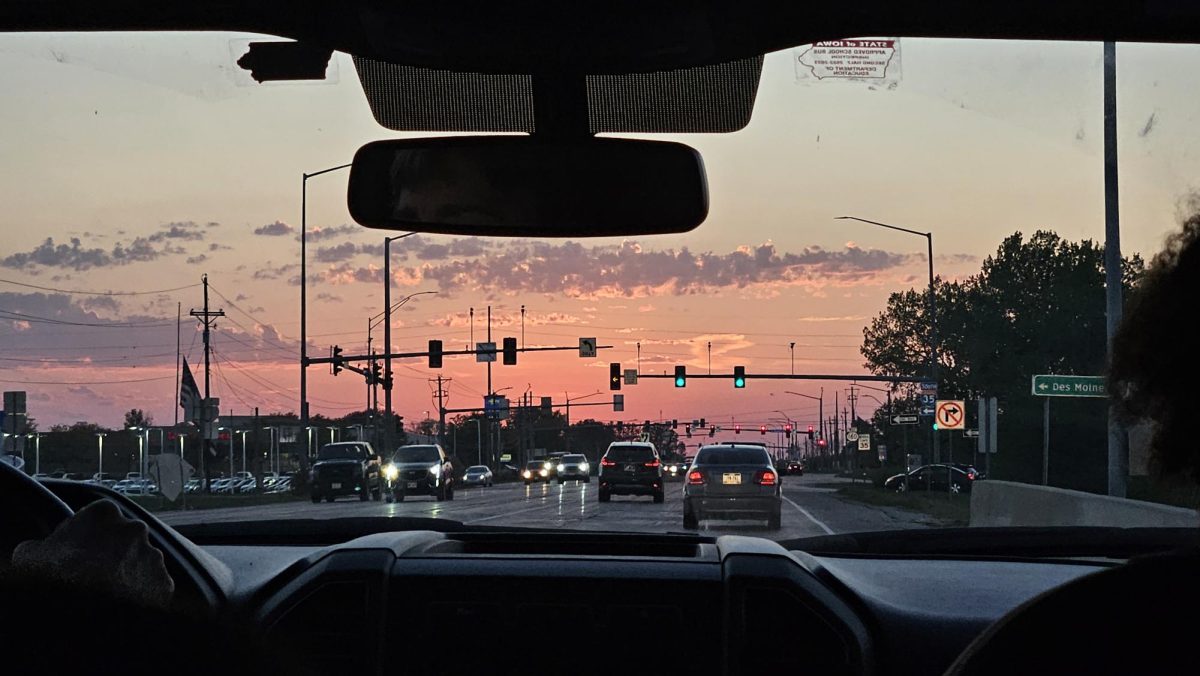
Every morning, there are students who arrive at the Ames High parking lot with plenty of time to spare. Instead of going in, though, they choose to sit in their cars. Not to finish homework or wait for someone, simply to delay the inevitable until they have no other choice.
During lunch, as I leave the building, I’ll see people, alone or with friends, eating their school lunch in the car, rather than in the cafeteria. During LCT, when I walk out to my car, I’ll pass someone already fully settled in: feet pulled up, phone in hand, head resting against the window. When I pull into the same parking spot thirty minutes later, they are in the same exact place as when I left.
It doesn’t stop at students, either. During breaks at work, my coworkers will routinely pass up the chance to take a break in the back in favor of fifteen minutes alone in their cars. And even at home, I have watched my own parents pull into the driveway or garage, whether after a full day at work or something as mundane as a grocery run, and sit in the car for twenty minutes before coming inside.
There are a couple of explanations as to why people do this. Psychologist Thuy-vy Nguyen of Durham University describes the car as an “in-between space,” an environment people can control entirely. It sits between one part of the day and the next, not truly a part of either.
When a car consistently feels more appealing as a place to relax than anywhere else, it has become less of a way to get somewhere and more of a place to be.
Do not post comments that are obscene or libelous. Refrain from writing comments that use copyrighted materials or that involve personal attacks, insults or threats. And please relate all comments to the story.